
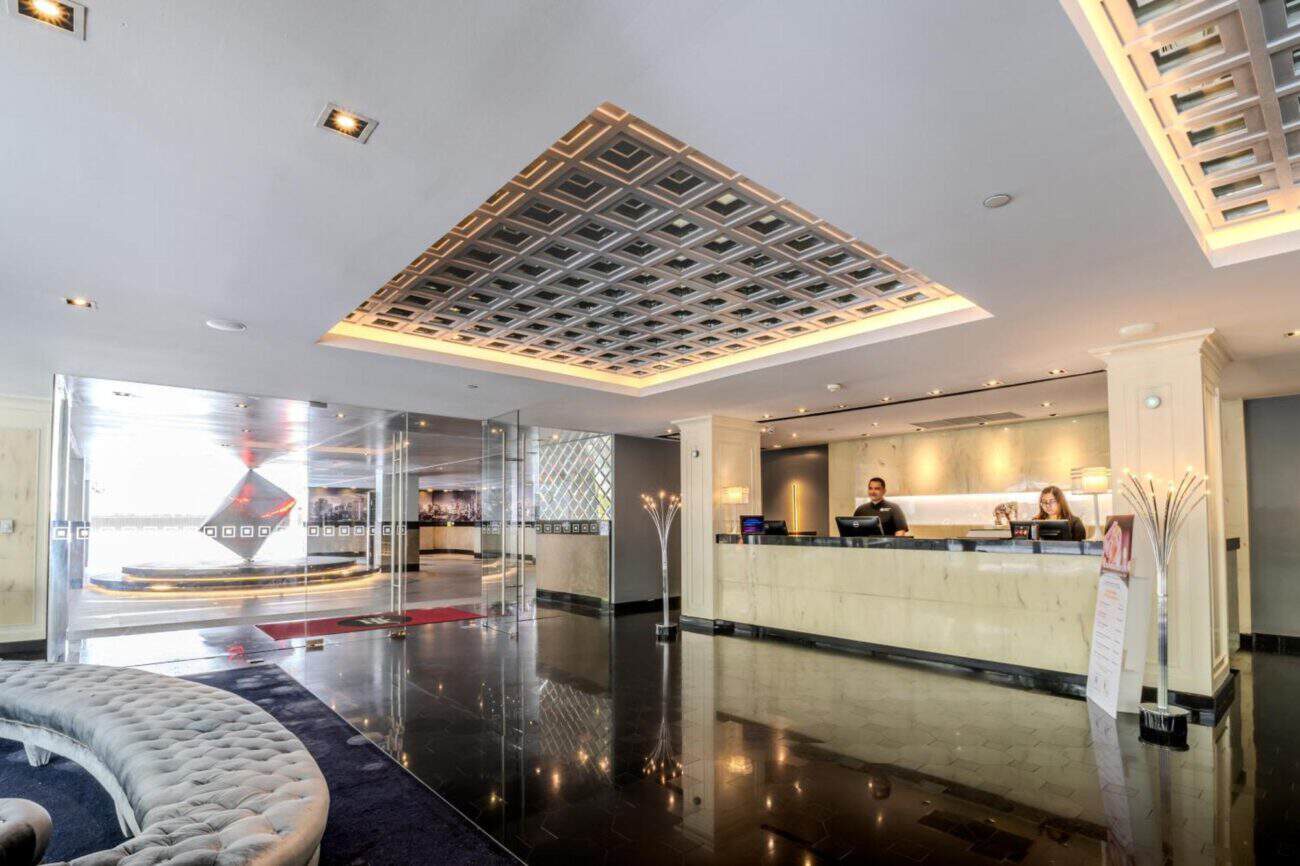
Almost every guest-friendly hotel list in Bangkok reduces a hotel’s policy to a tick or a cross. That single tick is hiding four different questions, and the difference between them is what actually costs people money and dignity at a front desk at 2am. This is the page the rest of our hotel section links back to: what the policy really governs, what happens at the desk, what genuinely gets charged, and — for 35 hotels — the policy in the hotel’s own words.
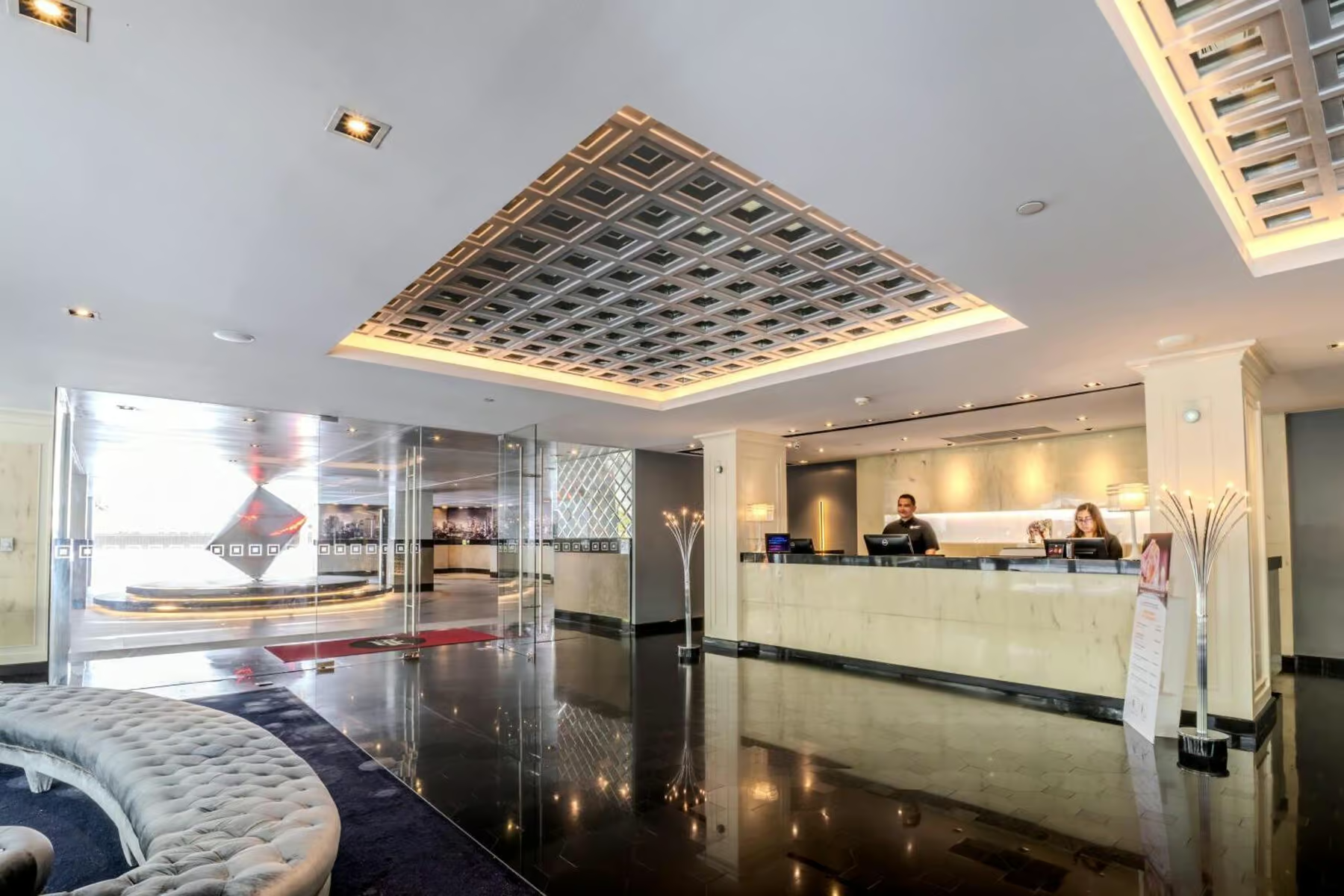
This is a guide under our main list of guest-friendly hotels in Bangkok — start there for what “guest-friendly” means and how joiner fees actually work.
Checked August 2026. Every quote below is reproduced as accurately as we can. Policies change without notice and staff apply them unevenly, so confirm with the hotel when you book rather than relying on any list, including this one.
The distinction everything turns on: who STAYS, not who visits
Here is the mistake at the root of nearly every guest-friendly list ever written. A hotel’s joiner policy is an occupancy rule. It governs how many people sleep in the room. It is not a rule about who may come up for a few hours, and the two get conflated constantly.
You can watch a hotel keep them apart in its own words. 137 Pillars writes the two cases as two separate sentences: “registration is required for all persons occupying the suites and residences” — that is the overnight rule — and then, separately, an instruction to notify the front desk about visitors. Different rules, different sentences.
S31 Sukhumvit is the clearest working example. Its written policy is “no joiner fee as long as there are only 2 person in a room”, which reads restrictive until you notice it is about beds. Two people staying is the booking. A third person staying is a registered extra guest at around ฿1,200. Someone who comes up and leaves never enters that arithmetic at all — which is why we have had ten-plus people in one suite there without anyone counting heads.
The rule to carry into every other page: The joiner rule tells you how many people can sleep in the room. It almost never tells you how many people can come up. Read every policy statement below asking which of those two it is answering.
What actually happens at the desk
The mechanics vary more than the money does. Across 35 hotels, four distinct processes appear:
- ID shown at reception. The commonest. Your guest presents ID, staff log it, it goes straight back. Sofitel’s wording is precise about this — the ID is “required to be present at reception”, not surrendered.
- ID held until departure. A step further, and stated most plainly by On8: “We will require your guest to deposit their ID-card at the reception which shall be returned on his/her departure.” She does not get it back until she leaves.
- A security desk at the lifts. Nana Hotel’s version, and the one no written policy anywhere discloses: a manned counter in the lift foyer takes a government ID from anyone going upstairs. It is a hard gate on the lifts rather than a soft registration, and it applies to short visitors exactly as it does to overnight guests.
- Key-card lift access. At DoubleTree Ploenchit and Adelphi the lifts need a card, so nobody comes up alone — you meet them in the lobby. Not a policy so much as a building, but it shapes your evening more than the policy does.
The short version: Ask the hotel which of these four it runs before you book. It changes the logistics of the night far more than a ฿500 fee would.
The desk is protecting you, and you should let it
A recurring question is how to find a hotel where you can get past reception unseen. The best answer anyone has given deserves quoting at length, because it is right:
“Hotel reception have seen it all. They also keep you safe. Some hotels will let you avoid reception, but I wouldn’t advise it. Good reception will keep her ID, and check on you after she leaves. And make sure she can’t get to your room without your permission!”
Unpack what that desk is actually doing for you. It records who came up, which matters enormously if anything goes missing. It controls access, so nobody reaches your door uninvited. At Adelphi it phones you twice — once to ask whether you are expecting someone, and again after she leaves to check everything is fine. And a good desk will quietly tell you what you may not have noticed, including whether your guest is a ladyboy if it thinks you have not clocked it.
None of that is policing. It is the hotel absorbing risk on your behalf, and it is free.
If the interaction itself is what you want to avoid, ask for the thing rather than dodging it: you can tell reception you are expecting a guest at a certain time, ask them to ring your room and send her up rather than fetching her yourself, and ask them to check she is fine before handing her ID back. Regulars do exactly this and it works. Big-lobby hotels also make you invisible by sheer scale — regulars note you can pass through the Marriott Marquis without meeting a single member of staff.
Age: the one place where the ID check is not optional
This needs saying directly, because it comes up constantly and the usual answers are bad.
In Thailand, 18 is the hard legal floor for commercial sex, and offences involving anyone under it are prosecuted extremely seriously — this is not an area with a grey zone or a sympathetic reading. The ID check at the desk is the mechanism that establishes age, and it is the only documentation you will ever have that you checked.
So when someone asks how to get past security in order to bring someone very young upstairs, understand what that advice actually is: it is advice to remove your own only evidence, in the one situation where you would most need it. A hotel that checks ID is not an obstacle to work around here. It is the thing standing between you and a catastrophe.
Let the desk see the ID. Every time.
The four things that actually cost money
Genuine joiner fees — a flat charge for bringing someone up — have become rare in the hotels we cover. Of 35 hotels with a sourced policy, not one currently charges one. What people actually get billed for is one of these four, and none of them is a joiner fee:
| What gets charged | How it works | Who says so |
|---|---|---|
| Exceeding room occupancy | The joiner is free; the room’s booked capacity is the real limit. Book a room for two and the question never arises — book a discounted single-occupancy rate and it might. | Carlton Bangkok, in writing: “there will not be extra charge for the joiner. However, in case of there is exceeding of maximum of the confirmed capacity…” |
| An extra bed | A third person staying overnight is an extra bed, priced as one. This is the charge most often mislabelled online as a joiner fee. | Rembrandt publishes “Extra bed charge will be 1,000 THB per night” — the exact figure aggregators repeat as its “joiner fee”. |
| Breakfast | Free to come up; not free to eat. The friction lands in the morning, not at the door. | DoubleTree Ploenchit is the only hotel we found that states it: “No breakfast for guest friendly.” Citrus Sukhumvit 11 prices breakfast per adult. |
| Your booking channel | One source says a hotel’s fee waiver applies only to bookings made on its own website. We could not verify it — but it is the kind of clause that surfaces at checkout, and booking direct costs nothing. | Reported of The Landmark: waiver “valid for booking through hotel website only”. Unverified. |
How to read a hotel’s policy statement — not all “yes” is equal
“No joiner fee” is not one claim. It is four claims of very different weight, and lists that flatten them into a tick are how bad information spreads. This is the ranking we use, strongest first:
- The hotel, in writing. First-person, unbeatable. Fraser Suites uses the word joiner itself, unprompted. Adelphi’s own management account wrote “Adelphi Suites is a guest friendly hotel.” 21 of our 35 are at this level.
- The hotel quoted second-hand. The hotel’s own reply relayed by someone else — usually verbatim, and the non-native phrasing is the tell that it was not paraphrased.
- A first-hand report of practice. Describes practice rather than policy, which is frequently the more useful thing. But it is one person, on one night, with one member of staff.
- Vague hearsay. Lowest grade. We never rest a hotel’s verdict on it.
The short version: A five-star that says nothing is not refusing you. International chains rarely publish a visitor policy at all — Sheraton Grande’s statement grants no permission and simply describes what its security officer does when a visitor arrives. Silence at that end of the market means indifference, not a no.
Three traps that produce wrong answers
1. OTA boilerplate that reads like a ban. The booking sites display “Registered guests are the only ones allowed in guestrooms” against a number of Bangkok hotels. It looks decisive. It is inherited chain distribution text — the identical sentence sits on DoubleTree Ploenchit, which has separately confirmed in writing that there is no joiner fee. It is not evidence either way, in either direction.
2. Lists recommending hotels that no longer exist. Of the hotels the standard guest-friendly lists still push, 14 have rebranded and one has closed. The Majestic Grande has been DoubleTree by Hilton Bangkok Ploenchit since 2019 — its own old website still carries the notice — and 2026 editions of major lists still recommend it under the dead name. A policy quote attached to a hotel that changed hands seven years ago is worth nothing.
3. Name collisions. Search Booking.com for “Nana Hotel” and the top result is a different property in Makkasan, kilometres from the plaza. Boss Suites Nana, Rose Nana, Crown BTS Nana and Nana City are all separate hotels carrying the soi name. We have had policy quotes for one hotel attach themselves to another this way more than once, which is why anything that might actually be about a neighbouring hotel gets dropped entirely rather than down-weighted.
How to check before you book — the email that works
The most reliable answer in this entire subject is not on any list. It is to ask, and it takes two minutes.
Email the hotel’s reservations address — not the booking site — and ask three specific questions rather than the vague one:
- “Is there any charge if a friend visits my room?” — the visit question.
- “Is there any charge if a second person stays overnight, and what is the maximum occupancy of the room I am booking?” — the stay question, which is the one that actually costs money.
- “What does your reception need from a visitor — ID shown, ID held, or registration?” — the process question, which decides the logistics of your night.
The short version: Keep the reply. Hotels answer these questions plainly and in writing far more often than you would expect — most of the 21 first-person quotes on this page exist because somebody simply asked. A printed email at the desk ends an argument instantly.
The policies we hold, in the hotel’s own words
35 Bangkok hotels for which we hold a guest-policy statement, ordered by how strong it is. “Not confirmed” is an honest answer, not a warning — it means we found no sourced statement, which at chain hotels is common and usually means indifference rather than refusal.
| Hotel | Policy | Evidence | Notes |
|---|---|---|---|
| Adelphi Suites | No fee | Hotel, in writing | Capped at one joiner — max two per room. Desk phones you on arrival and after departure. |
| Nana Hotel | No fee | Hotel, in writing | One guest at a time — the hotel’s own words. Overnight explicitly free. ID to the security desk at the lifts. |
| The Landmark | No fee | Hotel, in writing | Registration mandatory. Security officer screens the lobby from ~9pm. Book direct. |
| DoubleTree Ploenchit | No fee | Hotel, in writing | The most complete statement we have: no fee, no breakfast for the guest, ID and registration with security. |
| S31 Sukhumvit | No fee | Hotel, in writing | “No joiner fee as long as there are only 2 person in a room” — an occupancy rule, not a visitor rule. |
| Rembrandt | No fee | Hotel, in writing | The ฿1,000 “joiner fee” repeated online is its extra-BED charge. No visitor policy published at all. |
| Citrus Sukhumvit 11 | No fee for visitors | Hotel, in writing | “We do not charge for visitors.” Occupancy capped at 2; breakfast per adult. Management declines the question in public. |
| Sofitel Bangkok Sukhumvit | No fee | Hotel, in writing | “We are guest friendly hotel.” ID presented at reception, not surrendered. |
| JW Marriott Bangkok | No fee | Hotel, in writing | “Guests can bring a visitor to their rooms without extra charges.” Visitor collected by you at the lobby. |
| Sheraton Grande Sukhumvit | No fee | Hotel, in writing | Grants no permission and never uses the phrase — just describes what security does when a visitor arrives. |
| Hyatt Regency Sukhumvit | No fee | Hotel, in writing | ID at reception is recommended, not demanded. |
| Solitaire Sukhumvit 11 | No fee | Hotel, in writing | Own FAQ. ID to the Front Desk, so you meet visitors in the lobby. |
| Aira Sukhumvit 11 | No fee | Hotel, in writing | Own FAQ, and note the plural — “guest(s)” — with no one-at-a-time cap stated. |
| Pipa Sukhumvit 11 | No fee | Hotel, in writing | Same Kingston group wording. Formerly Grand President. |
| On8 Sukhumvit Nana | No fee | Hotel, in writing | ID deposited at reception and returned on departure. |
| Emporium Suites by Chatrium | No fee | Hotel, in writing | Single-source. Weakest of the tier — treat as a lead. |
| 137 Pillars Suites | Varies | Hotel, in writing | Writes the stay case and the visit case as two separate sentences. Registration-gated, not priced. |
| Carlton Bangkok Sukhumvit | No fee | Hotel reply, quoted | The clearest explanation anywhere of the occupancy-cap mechanism. |
| Fraser Suites Sukhumvit | No fee | Hotel reply, quoted | Uses the word “joiner” itself. Registration mandatory before going up. |
| Centre Point Sukhumvit 10 | No fee | Hotel reply, quoted | Best-corroborated free verdict we hold. Sources disagree on whether ID is shown or held. |
| Citichic Sukhumvit 13 | No fee | Hotel reply, quoted | Explicitly covers the overnight case, which most statements do not. |
| Lohas Residences | No fee | Hotel reply, quoted | Specifies a Thai ID held at reception — a foreign passport may be treated differently. |
| Chatrium Riverside · Pathumwan Princess · The Sukhothai · Nysa Sukhumvit 11 | Not confirmed | — | No visitor policy published either way. Occupancy rules exist but answer a different question. |
| Conrad · Siam Kempinski · Sindhorn Kempinski · Hotel Indigo Wireless Rd · Grande Centre Point Ploenchit · KROMO Curio · Sivatel · Walton Suites · The Davis | Not confirmed | — | Chain neutrality, or too new to have accumulated reports. Hotel Indigo carries the OTA boilerplate trap described above. |
Frequently Asked Questions
What is a joiner fee in Bangkok?
A surcharge some hotels apply when a second person joins you in the room. It has become rare — of 35 Bangkok hotels for which we hold a sourced policy statement, none currently charges one. What people usually get billed for instead is exceeding the room’s booked occupancy, an extra bed, or breakfast for the second person.
Does the joiner policy apply to someone who only visits for an hour?
Usually not, and this is the distinction almost every list gets wrong. A joiner policy is an occupancy rule — it governs how many people sleep in the room. Someone who comes up and leaves generally never enters that calculation. Some hotels write the two cases as separate sentences; 137 Pillars is the clearest example.
Why do Bangkok hotels ask for your guest’s ID?
Several reasons, and they mostly work in your favour: it records who came upstairs, it stops anyone reaching your room uninvited, and it establishes age. In Thailand 18 is the hard legal floor for commercial sex, and the ID check is the only documentation you will ever have that you verified it. Let the desk see it.
Can you avoid going down to the lobby to meet your guest?
Often, yes — just ask rather than trying to dodge the desk. Tell reception you are expecting someone, ask them to ring your room and send her up, and ask them to check she is fine before returning her ID. Regulars do exactly this. Note that where lifts need a key card, as at DoubleTree Ploenchit and Adelphi, you will have to come down.
Are five-star hotels in Bangkok guest-friendly?
In practice generally yes, but most international chains will not put it in writing. Sofitel, JW Marriott, Sheraton Grande and Hyatt Regency all have sourced statements; many others publish nothing at all. Silence at that end of the market means the brand does not acknowledge the subject, not that the property refuses.
How do you check a hotel’s guest policy before booking?
Email reservations directly and ask three separate questions: whether a visitor to your room is charged, whether a second person staying overnight is charged and what the room’s maximum occupancy is, and what reception needs from a visitor. Keep the reply — a printed email ends an argument at the desk instantly.
Related guides
- Guest-friendly hotels in Bangkok
- Where to stay in Bangkok for nightlife
- Luxury guest-friendly hotels on Sukhumvit
- Short-time hotels in Bangkok
- How we rate hotels and venues
Some links here are affiliate links — we may earn a commission at no extra cost to you, and it never changes our reviews. Details.
More like this
 Nana Hotel Bangkok Review: The Lift Desk, the Pool & What ฿1,790 Actually Buys★★★★★3.0Community
 Adelphi Suites Bangkok Review: Big Rooms, a Smooth Guest Policy & the Two Phone Calls★★★★★4.5Community
 DoubleTree by Hilton Bangkok Ploenchit Review: The Hotel Every Guest-Friendly List Still Calls Majestic Grande★★★★★4.0Community
 Citrus Sukhumvit 11 Review: The Written Policy, the Breakfast Trap & the Glass Bathroom★★★★★3.5Community
 Luxury Guest-Friendly Hotels on Sukhumvit: Suites Worth Going Back To★★★★★—Community
 Bangkok Hotels With a Balcony: The Rooms That Really Have One★★★★★—Community